The EU is preparing the so-called "28th regime" for businesses. It is intended to simplify business operations and support the growth of startups, but the key question is whether it will actually reduce bureaucracy.
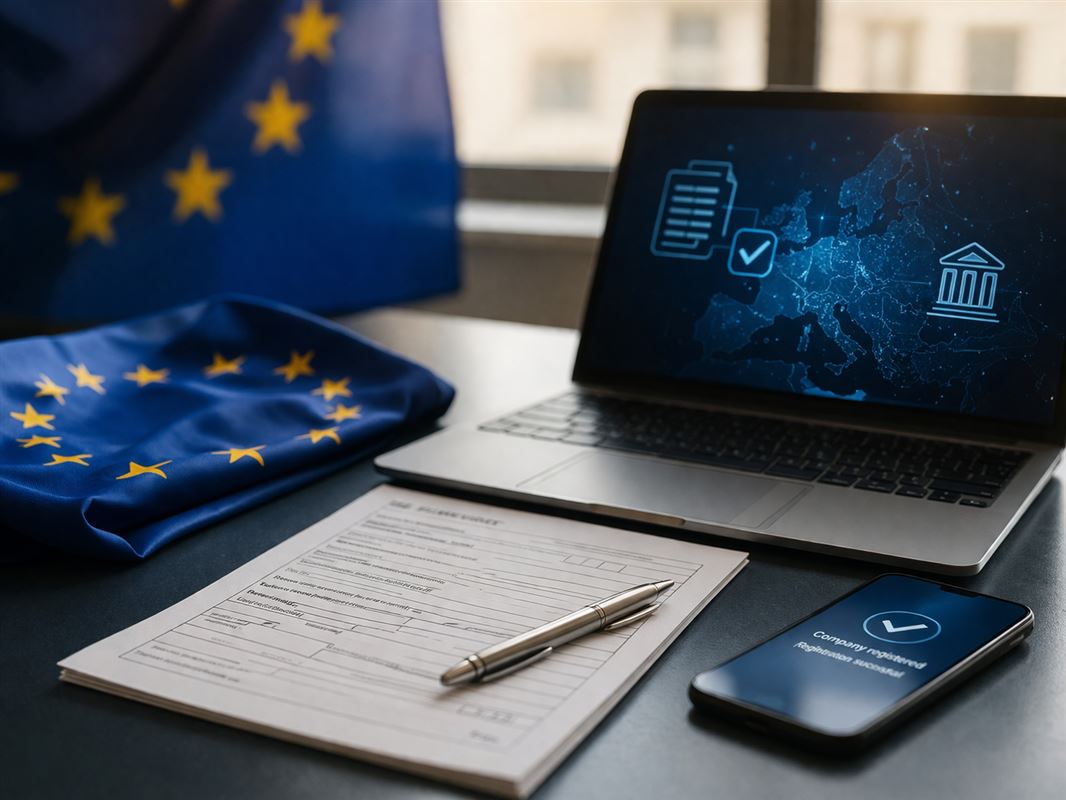
The European Union has long spoken of a single market, but the reality of doing business often resembles a collection of national systems rather than a single functional entity. The proposal for the so-called “28th regime” addresses this very issue, aiming to establish a unified framework for how companies operate across the EU.
The goal is ambitious—to simplify the formation of companies, their financing, and their expansion without unnecessary red tape. The proposal envisions a fully digital company formation process, a fast registration process, and the “once-only” principle, which aims to limit the repeated submission of the same data to various authorities.
Europe, however, faces a long-standing problem. It has plenty of talent and innovation, but struggles to turn them into globally successful companies. This is precisely why it is becoming increasingly clear that competitiveness is not just about capital, but also about how quickly and easily an entrepreneur can turn an idea into a functioning business.
However, it remains to be seen whether the original intent of the proposal will be preserved. Experience shows that even good initiatives often turn into compromises during the approval process—compromises that, while offending no one, do not fundamentally help either.
The question, therefore, is not simply whether Europe will create a new regime.
The question is whether it will also be able to reduce bureaucracy so that companies actually want to use it.